⚡️ Executive Summary for Ambitious Owners
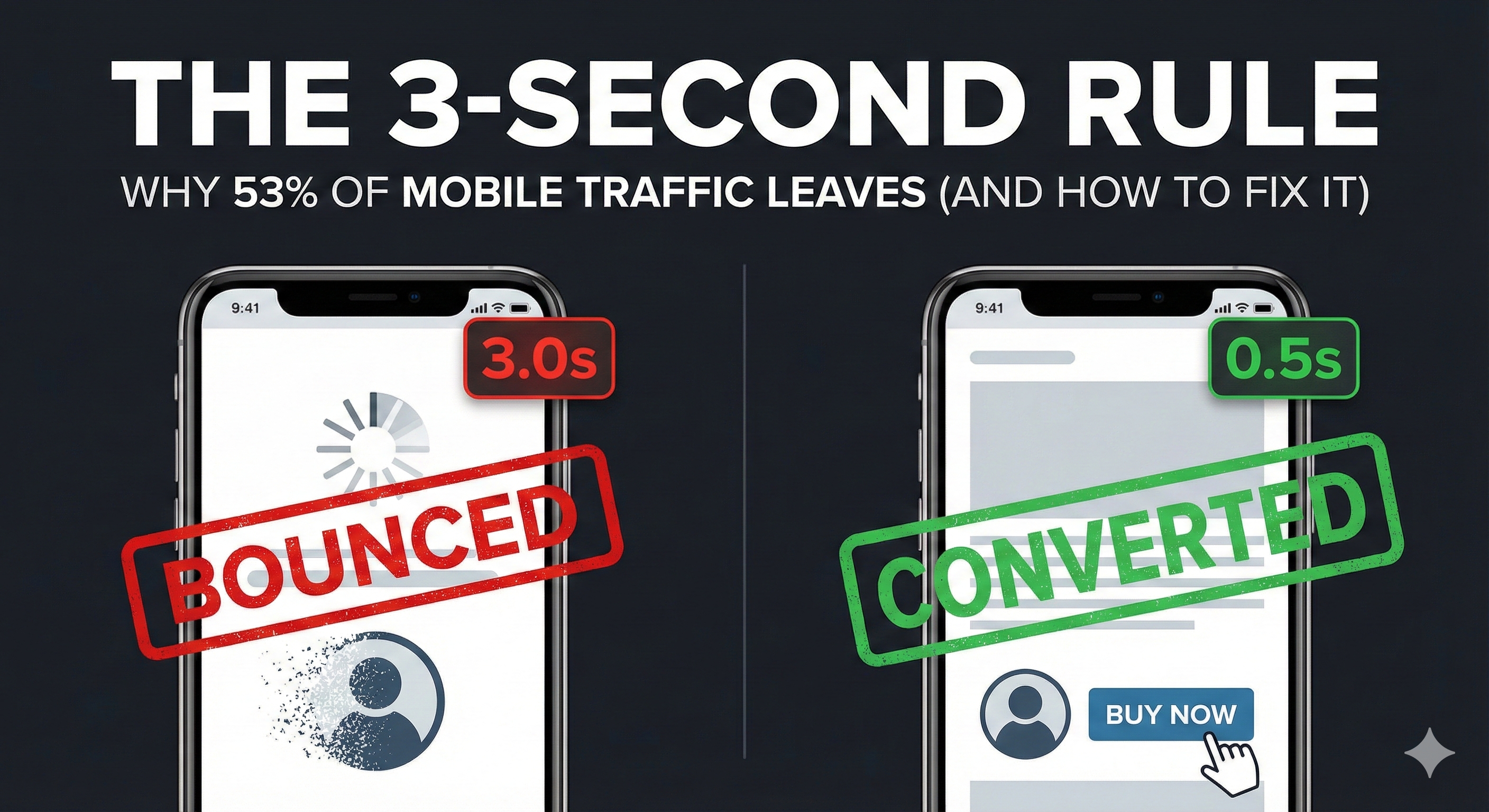
You are likely wasting half of your advertising budget. Google data confirms that 53% of mobile users abandon a site if it takes longer than 3 seconds to load. This isn't a technical issue; it's a revenue hemorrhage. This article explains exactly why mobile visitors bounce, how to diagnose your own site instantly, and why upgrading your digital infrastructure is the highest-ROI marketing move you can make.
Picture this scenario. You are spending $2,000 a month on Instagram or Google Ads. Your targeting is perfect. Your ad creative is stunning. A potential customer, scrolling on their phone during a lunch break, sees your ad. They are interested. They click.
A white screen appears.
One second passes. Two seconds. A loading bar crawls across the top. Three seconds.
They swipe back to Instagram.
You just paid $5.00 for that click, and they didn't even see your logo. Multiply that by hundreds of clicks a month. This is the reality for the majority of small businesses operating on outdated website platforms.
The New Reality: Patience is Zero
We are living in an era of hyper-distraction. On a desktop computer in an office, a user might tolerate a 5-second load time. On a mobile device, in the real world, patience is non-existent.
If your digital flagship doesn't load almost instantly, you aren't just losing a visitor; you are actively telling them that your business is slow, outdated, and frustrating to deal with. First impressions are no longer about design; they are about speed.

It’s Not Just Speed, It’s "User Frustration" (Core Web Vitals)
Google knows this, which is why they introduced Core Web Vitals. These are ranking signals that measure user experience. Forget the technical jargon; think of them as "Frustration Metrics."
If you fail these, Google will actively penalize your search rankings. But more importantly, users will penalize you with their wallets.
The Three Horsemen of the Mobile Apocalypse:
1. The Patience Test (Largest Contentful Paint - LCP)
How long until the main content (usually your hero image or headline) is actually visible? If the user is staring at a blank white screen for 4 seconds, you’ve already lost them.
2. The Janky Layout (Cumulative Layout Shift - CLS)
This is the most infuriating one. The page loads, the user goes to tap "Contact Us," but suddenly a giant image pops in above it, pushing the content down. They accidentally tap an ad instead. This is a "rage click" inducer. It feels cheap and broken.
3. The Frozen Screen (Interaction to Next Paint - INP)
The site looks loaded, but when they tap the menu button, nothing happens for a full second because the browser is too busy processing heavy code in the background. It feels unresponsive.
"A slow website on a mobile phone feels broken. A customer will not trust a 'broken' business with their credit card details or their contact information."
The Culprits: Why Your Site is Probably Slow
Why do so many businesses fail these tests? Usually, it comes down to the tools they are built with.
1. The "Desktop Hangover" (Giant Images)
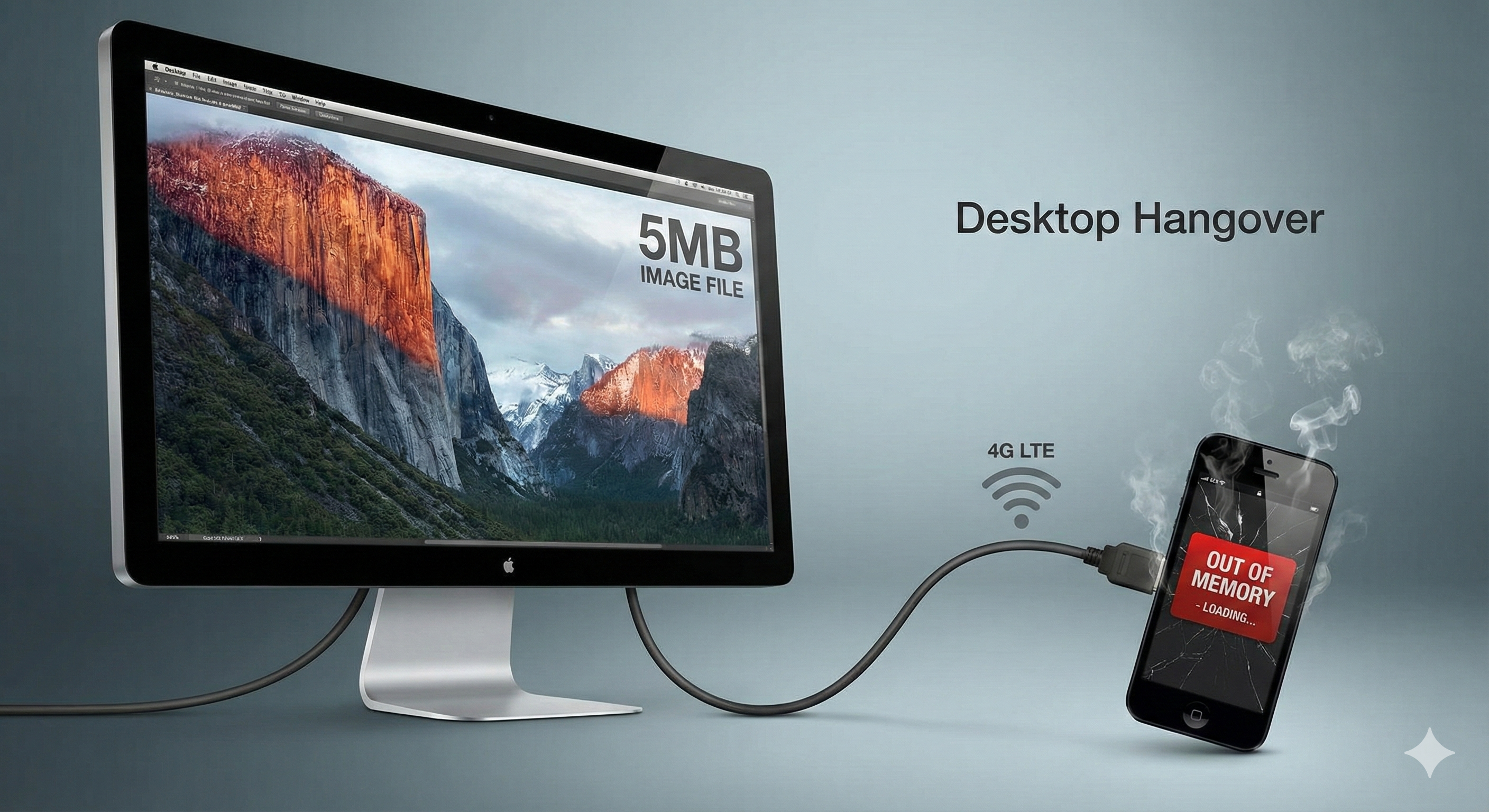
Your web designer loaded a beautiful, 4K resolution photograph as your hero image. It looks stunning on a 27-inch iMac in the studio. But that image file is 5 Megabytes. Trying to pull a 5MB file over a 4G cellular connection on a bus is a death sentence for load time. Your site needs technology that automatically resizes images specifically for the device viewing them.
2. "Builder Bloat" (Wix, Squarespace, Cheap WordPress Themes)
Drag-and-drop builders are easy to use because they pack every conceivable feature into their code base. When a user loads your site, their phone has to download the code for every possible feature the builder offers, even if you are only using 5% of them.
It’s like packing for a month-long European vacation when you are just going away for an overnight trip. It’s heavy, inefficient, and slow.

The DIY Diagnosis: Check Your Site Right Now
Don't take my word for it. Google provides a free tool to check this. Do this right now:
- Go to PageSpeed Insights (search it on Google).
- Enter your website URL.
- IMPORTANT: Look at the "Mobile" tab first.
Do not get distracted by a green score on Desktop. Desktop is easy. Mobile is where the war is won. If your mobile score is red (below 50) or orange (50-89), you are actively bleeding leads. You are paying for traffic that you are immediately repelling.
The Solution: Engineering for Velocity
At Aryx Studio, we don't use drag-and-drop builders for high-performance clients. We build digital flagships using modern architecture (Next.js and React).
Think of it like this: A standard website is like a restaurant where you order food, and then the kitchen has to chop the vegetables and cook the meal from scratch while you wait.
Our approach (Static Generation) is like a fine dining experience where the prep work is already done. The moment you sit down, the perfectly plated meal is served instantly.
We ensure:
- Images are automatically optimized for mobile devices.
- Only the exact code needed for that specific page is loaded.
- Layouts are stabilized to prevent shifting.
The result isn't just a better technical score. It's a seamless, cinematic user experience that builds instant trust and captures the 53% of visitors your competitors are losing.
Is Your Mobile Site Costing You Sales?
Stop guessing. Send us your URL for a free, no-nonsense video audit of your mobile performance. We’ll show you exactly where you’re losing leads and how to fix it.
GET MY FREE MOBILE AUDIT